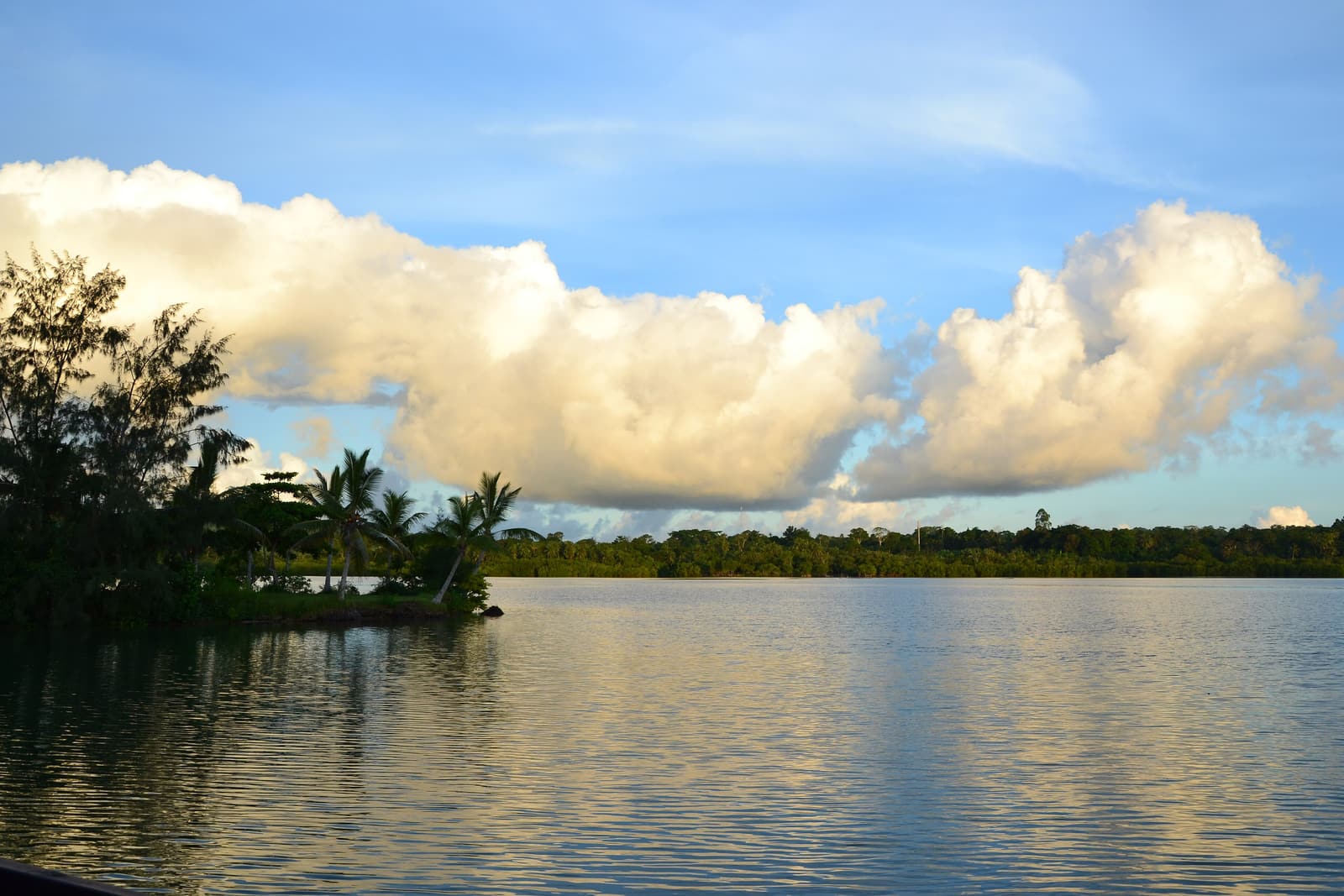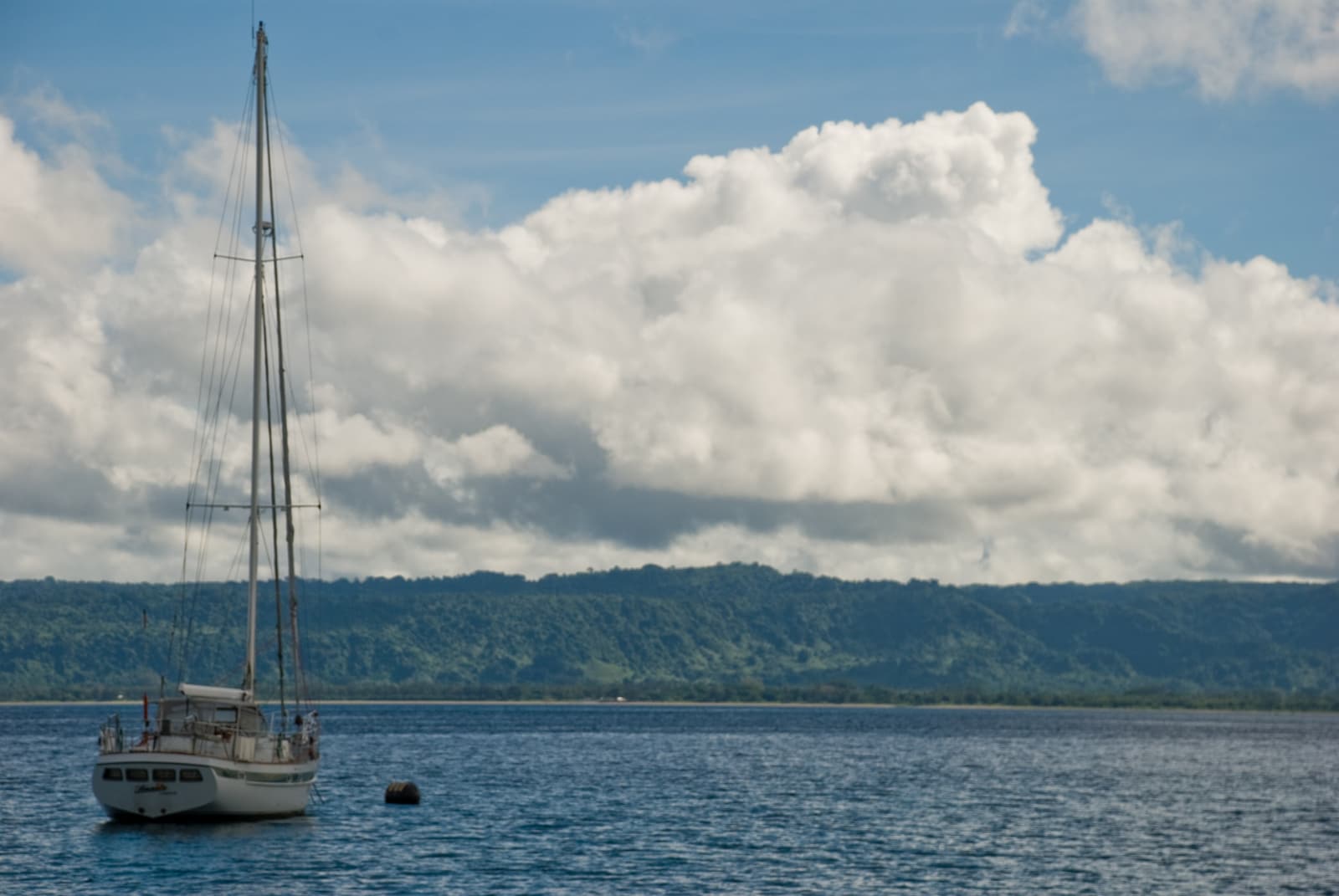
Port Vila is the capital and only real town of Vanuatu, a Y-shaped chain of 83 islands in the south-west Pacific, roughly three hours’ flight from eastern Australia. It sits on the south-west coast of Efate, around a harbour protected by the small islands of Iririki and Ifira.
A very short history
People of the Lapita culture reached these islands about 3,000 years ago. Europeans named them the New Hebrides, and from 1906 to 1980 Britain and France ruled them jointly as a Condominium — two police forces, two school systems, two sets of laws — which is why Port Vila still has baguettes and meat pies, French and English street names, and schools in both languages. During World War II Efate was a large American base. Independence came on 30 July 1980, and the country took the name Vanuatu, “our land forever”.
Two recent events shape a visit today. Cyclone Pam, a category 5 storm, devastated Efate in March 2015. And on 17 December 2024 a magnitude 7.3 earthquake struck just offshore, killing 14 people and wrecking parts of the town centre. The central business district was closed for several months and a number of buildings were demolished. Tourism has recovered strongly and resorts, tours and the airport operate normally, but rebuilding in the centre continues — if a particular shop, restaurant or public building matters to your plans, check its current status.
How long to stay
| Time | Suggested plan |
|---|---|
| One day (cruise call) | The Blue Lagoon, or Mele Cascades and Hideaway Island, then an hour in the market |
| 3–4 days | Town and lagoon; Mele Bay; an east-coast day at the Blue Lagoon and Eton Beach; one snorkelling or island trip |
| One week | All of the above, plus a round-island drive, a day on Pele or Nguna and two nights on Tanna for Mount Yasur |
| 10–14 days | Add Espiritu Santo for the blue holes, Champagne Beach and diving |
 Port Vila & Mele Bay
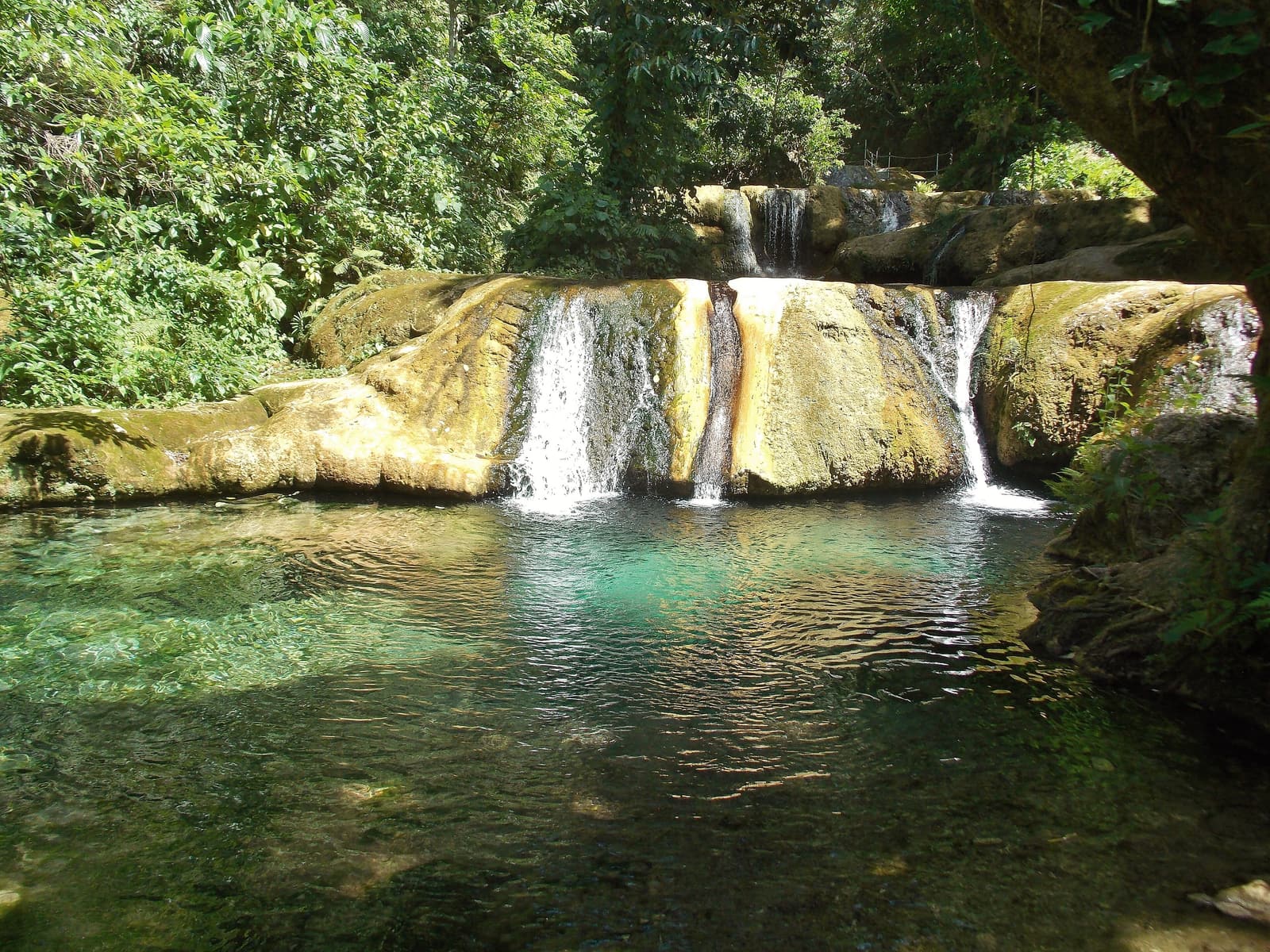
Mele Cascades
Terraced pools and a rainforest waterfall
A river tumbling down a limestone hillside through a staircase of clear turquoise pools, ending in a waterfall of around 35 metres. Fifteen to twenty minutes from town, it is the most popular natural sight near Port Vila — and you swim your way up it.
 Port Vila & Mele Bay
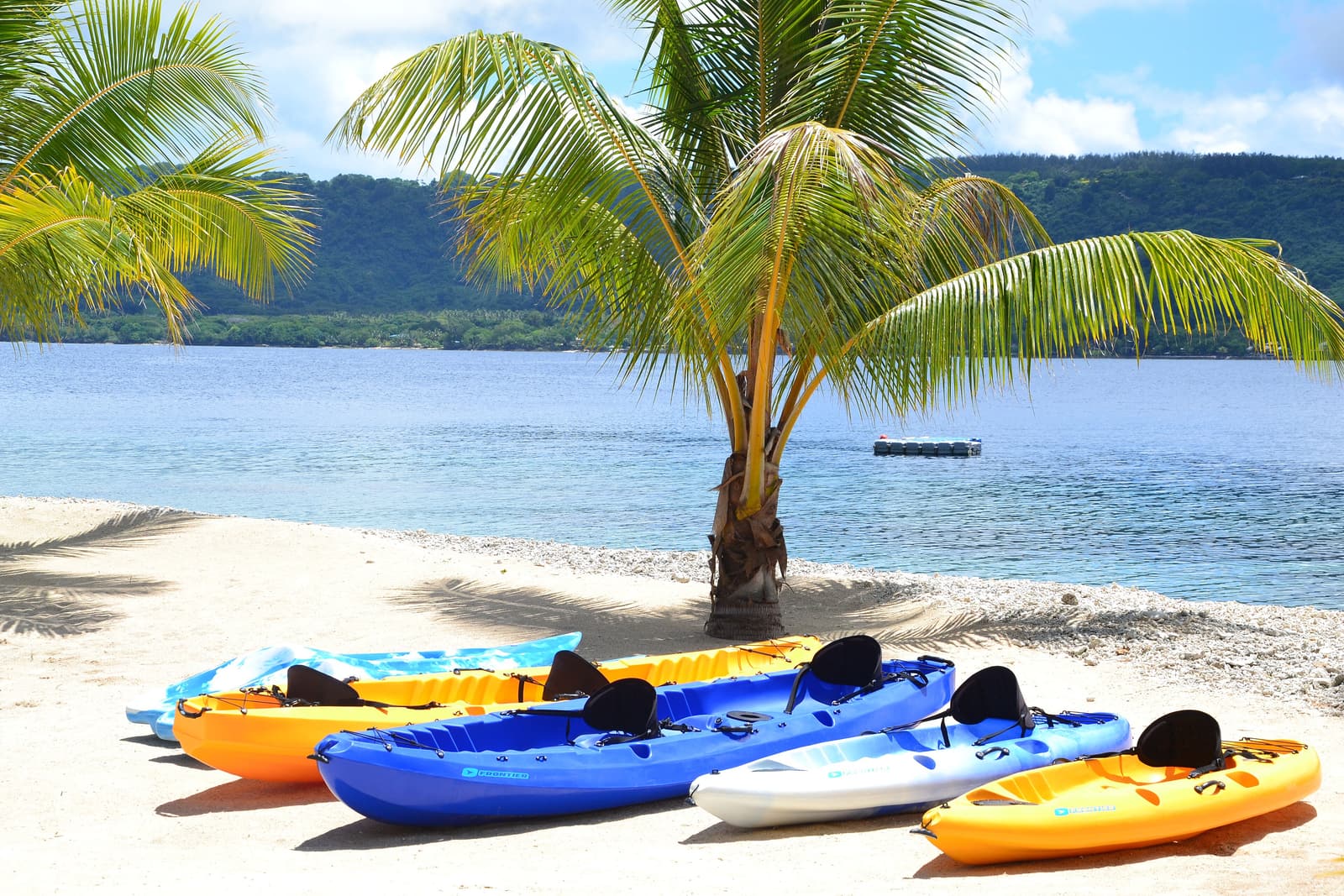
Hideaway Island
A marine sanctuary with an underwater post office
A tiny coral island in Mele Bay, a few minutes by free ferry from Mele beach. The reef around it is a protected marine sanctuary with some of the easiest snorkelling on Efate — and a mailbox on the seabed where you can post a waterproof postcard.
 Around Efate
The Blue Lagoon
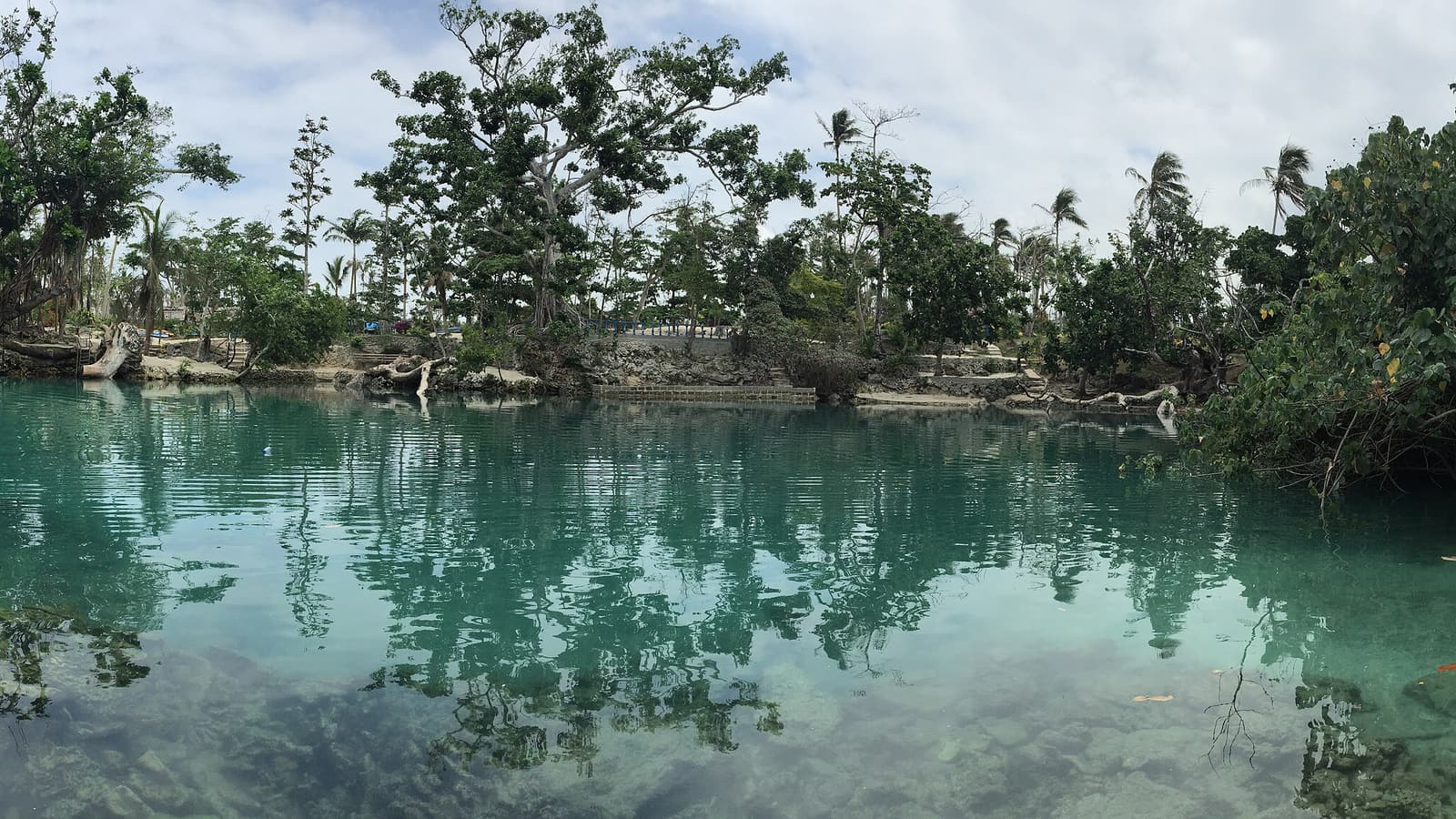
Efate’s famous turquoise swimming hole
A deep, tree-ringed inlet on the east coast where fresh spring water meets the sea and turns a startling blue. Rope swings, platforms and calm water make it the swim everyone wants — about 40 minutes from Port Vila by road.
 Around Efate
Eton Beach
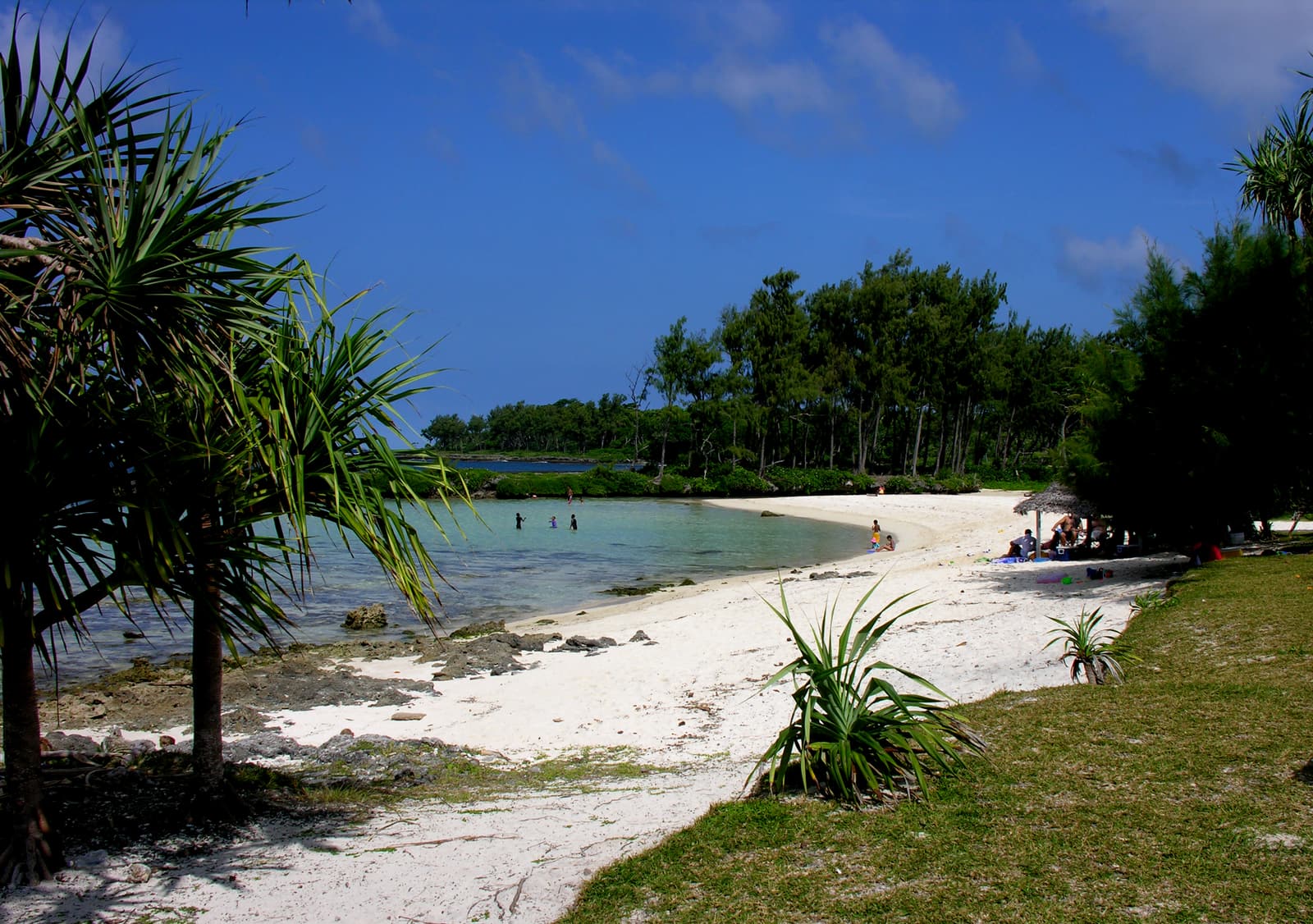
White sand, a river mouth and a reef
The prettiest easily reached beach on Efate: soft white sand, a shallow lagoon sheltered by reef and a small freshwater stream running into the sea. A few minutes beyond the Blue Lagoon and the natural second stop on any east-coast day.
Money and costs
- The currency is the vatu (VUV). Notes and coins have no decimals. Exchange rates move — check before you travel.
- Cash matters. Buses, taxis, the market, kava bars and almost every village-owned beach or swimming hole are cash only. ATMs are in the town centre and at the airport; there are few or none elsewhere on the island.
- Cards are taken at resorts, supermarkets and larger restaurants, sometimes with a surcharge.
- Tipping and bargaining are not part of ni-Vanuatu culture. Pay the asking price in markets; a sincere thank-you is the customary reward for good service.
- Custom fees: land and reefs belong to families and villages, so paying a small entry fee at a beach or waterfall is normal and goes directly to the owners.
- Port Vila is not cheap: most goods are imported. Local food at the market is the bargain.
Language and a little Bislama
Vanuatu has more than a hundred indigenous languages and three official ones: English, French and Bislama, an English-based creole everyone shares. English is understood almost everywhere in Port Vila, French widely. A few words of Bislama earn big smiles:
- Halo — hello
- Tangkyu tumas — thank you very much
- Plis — please
- Olsem wanem? — how are you?
- I gud nomo — fine, thanks
- Hamas? — how much?
- Sori — sorry
- Lukim yu — see you later
- Nambawan — excellent (“number one”)
Kava and the nakamal
Kava, made from the root of a pepper plant, is Vanuatu’s national drink and is stronger here than anywhere else in the Pacific. It is drunk at dusk in a nakamal — a kava bar, usually an open yard with benches and a lantern at the gate to show that the day’s brew is ready. You buy it by the “shell” (traditionally a coconut half, now often a bowl), in small or large sizes, step aside, and drink it in one go. It tastes earthy and peppery, numbs the mouth and brings a calm, clear-headed heaviness.
- Start with one small shell and wait twenty minutes.
- Nakamals are quiet places: speak softly and keep lights and phone screens dim.
- Do not mix kava with alcohol, and do not drive afterwards.
- Avoid it if you are pregnant, have liver problems or take medication — ask a doctor if unsure.
- Ask your hotel to recommend a nakamal; many welcome visitors, women included.
Food and drink
Look for laplap (grated root crops baked in leaves with coconut cream), fresh fish in coconut and lime, local beef — Vanuatu’s grass-fed beef is deservedly famous — and tropical fruit by the heap. The French legacy means good bread, pastries and steak-frites. Tanna coffee is grown on volcanic soil and roasted just outside town; there is locally made chocolate, and the local beer is Tusker. Tap water in Port Vila is treated and generally considered safe; outside town, drink bottled or filtered water.
Health
- Mosquitoes: malaria risk in and around Port Vila is considered low, but it exists on other islands, particularly in the north. Dengue occurs across Vanuatu, including in town, with periodic outbreaks. Use repellent, cover up at dawn and dusk, and take advice from a travel-health clinic before you go.
- Sun and sea: the sun is fierce. Coral cuts infect easily — clean them at once and wear reef shoes.
- Medical care is limited. Serious cases are evacuated to Australia or New Caledonia, so travel insurance that covers evacuation is essential.
Safety and natural hazards
Port Vila is a relaxed, friendly town. Take ordinary care with valuables and avoid walking alone on unlit roads late at night. The real hazards are natural: Vanuatu lies on the Pacific “Ring of Fire” and in the cyclone belt. Earthquakes are frequent and occasionally severe; know your accommodation’s evacuation route and move to high ground if a strong quake is followed by a tsunami warning. The cyclone season runs from about November to April.
Manners and kastom
- Dress modestly away from the pool or beach — cover shoulders and thighs in town and in villages.
- Ask before entering a village, walking across land or photographing people.
- Sunday is for church and family; much is closed and the mood is quiet.
- Public displays of anger get you nowhere. Patience and humour work.
Practical details
- Time: UTC+11, with no daylight saving.
- Electricity: 220–240 V, with the same angled three-pin plugs as Australia and New Zealand.
- Driving: on the right.
- Internet: mobile data works well in town and patchily around the island; resort Wi-Fi varies.
- Shopping hours: many shops close for a long lunch and on Saturday afternoon and Sunday.
Combining Vanuatu with Fiji
Many travellers pair Efate with Fiji, and the usual link is the direct flight between Port Vila and Nadi, roughly two hours (check current schedules). Port Denarau, near Nadi, is where the boats leave for Fiji’s Mamanuca Islands — our Mamanuca Islands guide helps you choose an island and plan the ferry or day cruise.
What to pack
Light clothing, a rain jacket, reef shoes, a mask and snorkel if you have them, reef-safe sunscreen, insect repellent, a dry bag, a sarong or cover-up for villages, and a light layer for evenings from June to September. Bring any prescription medicines you need.
The sights
Each of these has its own guide with directions, fees and tips.