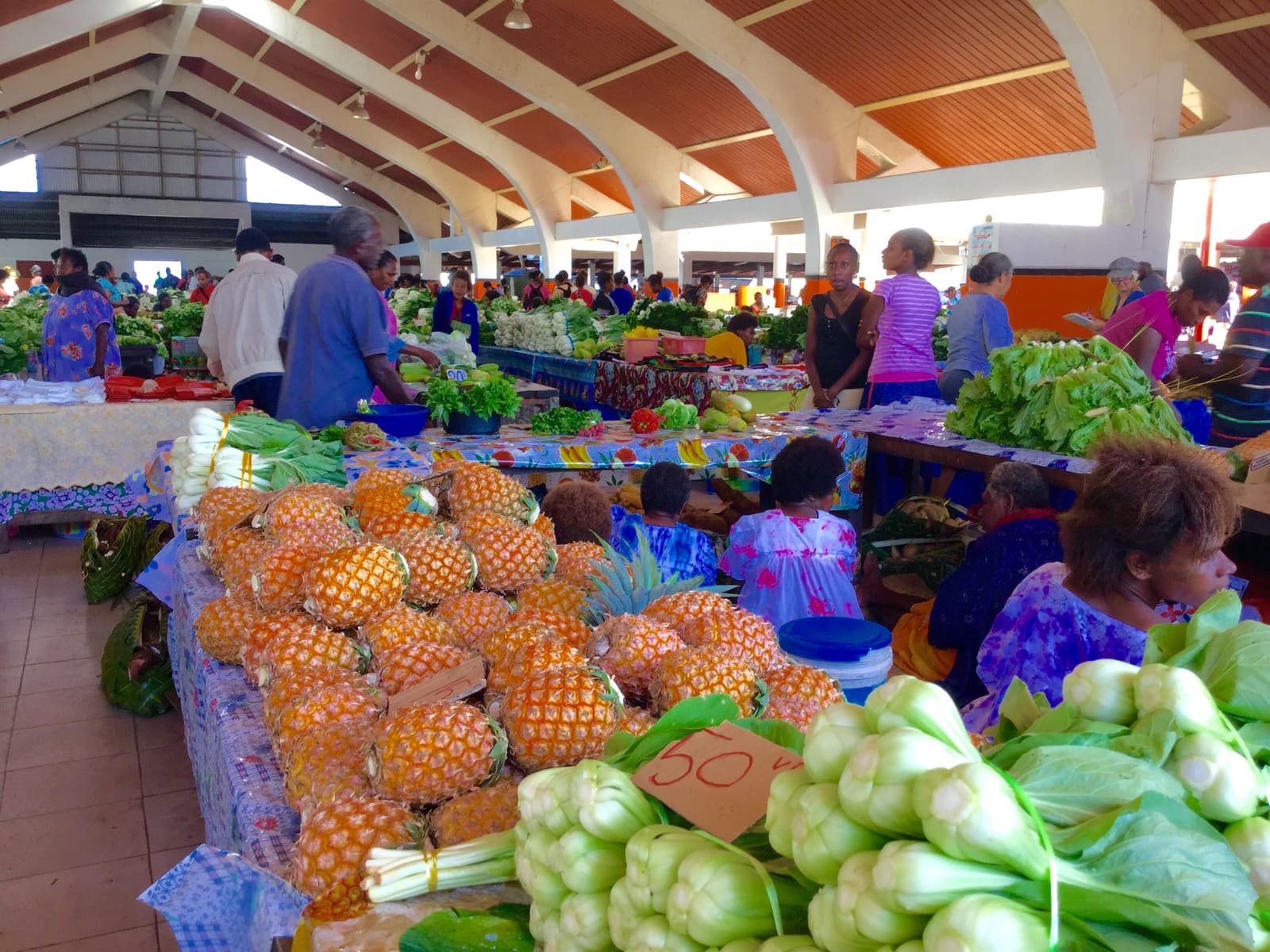
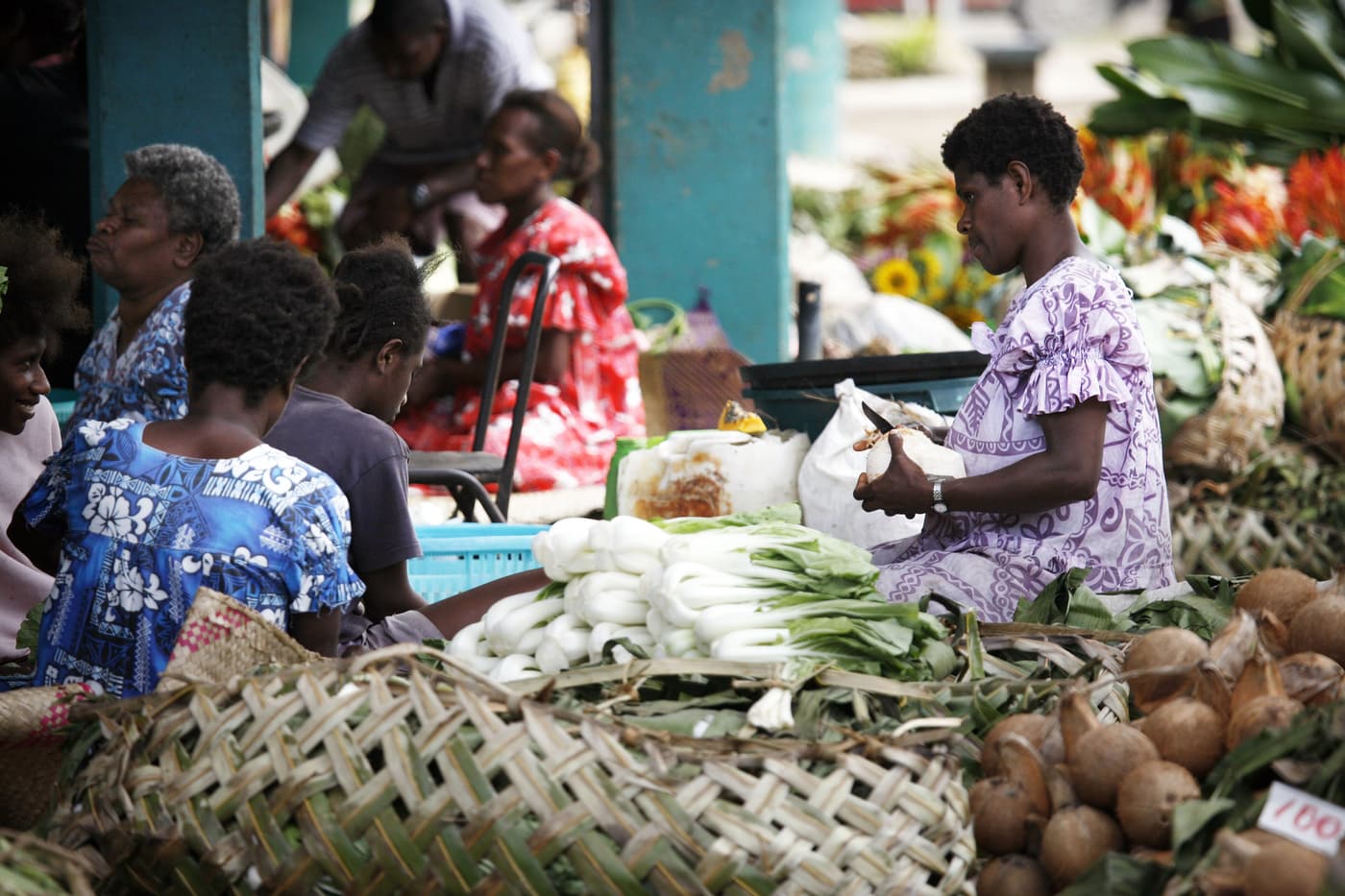
Port Vila’s central market is a big, open-sided hall on the seafront where women from villages all over Efate — the “mamas”, in their bright island dresses — sell what they grow: taro, yams, manioc, island cabbage, bananas, pawpaw, coconuts, peanuts, flowers and firewood. Produce is laid out in neat heaps or woven palm-leaf baskets with the price on a card.
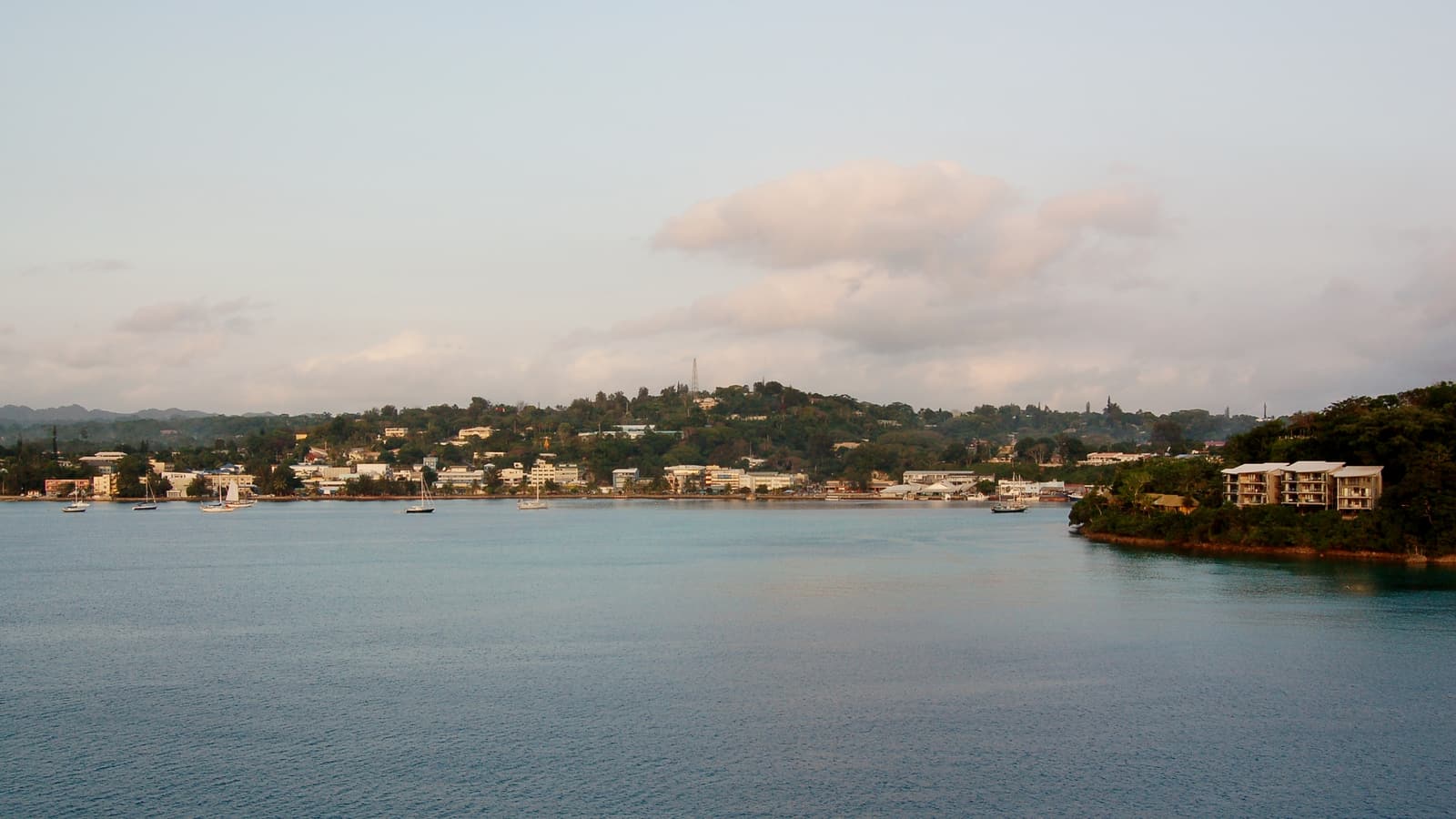
It runs more or less around the clock from Monday morning until Saturday midday; many sellers stay with their stalls all week. Beyond the market, the seafront promenade follows the harbour wall past cafés, the handicraft market and the jetties for Iririki and the harbour boats.
A note on the town centre: the earthquake of 17 December 2024 badly damaged parts of the central business district, and a number of buildings were later demolished. The centre is open and busy again, but there are still empty lots and construction sites, and individual shops and cafés may have moved — check the current status of anything specific you want to visit.
Top things to do: Port Vila Market & Seafront
Eat lunch at the back of the market
The food stalls at the rear serve big, inexpensive plates — typically fish, beef or chicken with rice and vegetables. Look for laplap, the national dish: grated root vegetable or banana baked in leaves with coconut cream, and tuluk, a manioc parcel filled with meat.
Walk the seafront
The promenade and seafront park make a pleasant, flat walk with views of Iririki and the yachts. It is the best place in town for sunset.
Browse the handicraft market
Stalls along the seafront sell woven baskets and mats, carvings, sarongs and shell jewellery. Ask whether items are made in Vanuatu — some souvenirs are imported.
Coffee, chocolate and duty-free
Vanuatu grows very good coffee, mostly on Tanna, and cacao; you can buy both in town or visit the roastery and chocolate makers on a food tour. Several shops sell duty-free alcohol, perfume and electronics to departing visitors — bring your passport and ticket details.
How to get to Port Vila Market & Seafront
- On foot: the market is in the middle of the seafront; most of the town centre is within ten minutes’ walk.
- By bus: any minibus with a “B” plate heading into town will drop you there for a flat in-town fare.
- From the cruise wharf: about 10 minutes by bus, taxi or water taxi — see the cruise day guide.
Insider tips
- Prices are fixed and fair. Bargaining is not part of the culture here and can cause offence.
- Bring small notes and coins in vatu. Sellers rarely have change for large notes and do not take cards.
- Ask before photographing people; a smile and a “halo” go a long way.
- The market is closed from Saturday afternoon and all day Sunday, when most of the town is very quiet.
- Visitors may not take most fresh produce home — Australia and New Zealand have strict biosecurity rules.
Tours that include Port Vila Market & Seafront
These bookable experiences are the easiest way to see Port Vila Market & Seafront:
Food & town tour from €98 Port Vila: Market Tour, Chocolate Factory and Coffee Tasting
Port Vila through its food. A guide walks you through the fresh-produce market and the handicraft stalls, then takes you to a small chocolate factory and the Tanna Coffee roastery for an espresso.
- Guided walk through the produce market
- Handicraft market and a chocolate-factory visit
- Espresso at Tanna Coffee
Private tour from €248 per group Port Vila: Private Customisable Tour with Driver
A private vehicle and local driver for five hours, with the route built around what you want to see. Priced per group, so it works out well for families and friends sharing.
- Your own vehicle and driver
- Choose your own stops and pace
- Priced per vehicle, for up to 14 people